
Discover more
Finding the right 3PL partner for DSCSA- and FMD-compliant serialization
The existence of counterfeit and substandard drugs threatens public health worldwide. As a result, many countries have adopted stringent pharmaceutical serialization regulations in an attempt to eliminate these products from the supply chain and reduce the associated risk to patients.
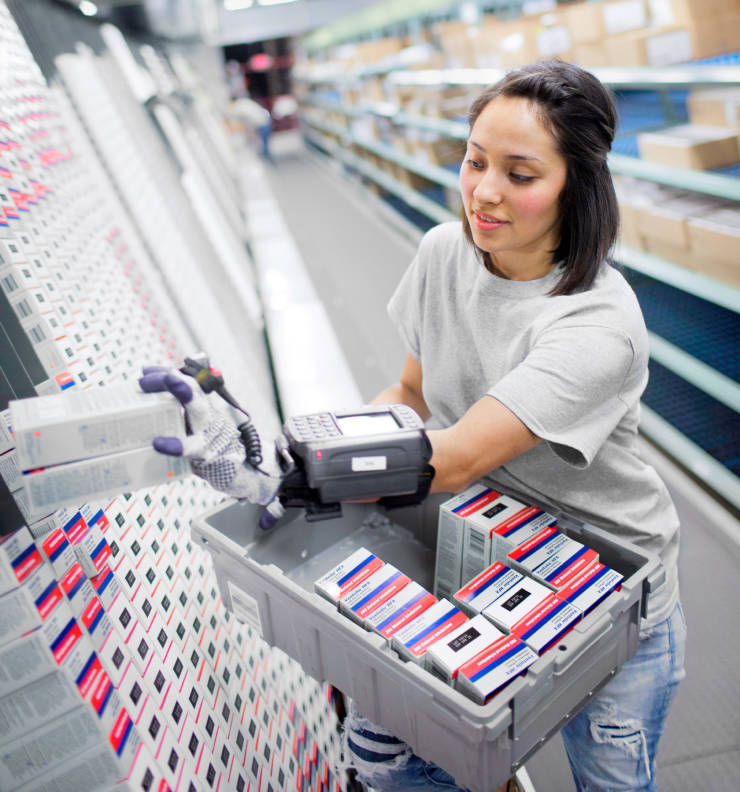
In the U.S., the Drug Quality and Security Act (DQSA) and the associated Drug Supply Chain Security Act (DSCSA) were enacted in 2013. In the European Union, the Falsified Medicines Directive (FMD) was adopted in 2019. These acts introduced sets of regulations that apply to manufacturers, re-packagers, third-party logistics (3PL) providers, wholesale distributors, and dispensers.
The benefits for the industry are clear:
- Greater supply chain security
- Optimized patient safety
- Continuous regulatory compliance across borders
For pharma manufacturers, adapting to drug serialization challenges can be complicated. We offer compliant serialization services wherever legislation requires it. Adding Cencora as your logistics partner allows you to navigate current and future global regulatory requirements and find value beyond compliance. Whether you have an established product portfolio or are launching your first therapy, our expert 3PL systems allow our clients to maintain compliance with serialization requirements along their commercialization journeys.
Key benefits
Expert account management model
We act as your single point of access to a more efficient, reliable supply chain. Our solutions incorporate strategic program design, better 3PL, and more actionable performance analytics.
Integrated commercialization support
Access innovative solutions from across Cencora’s worldwide network. Our expert consultants can guide you toward seamless integrations with innovative technologies that can improve every step of your product and patient journeys.
Partnership-driven approach
We approach our customer relationships as true partnerships. We bring a solution-focused mindset to every project to provide flexibility and unparalleled support throughout your product’s journey.
Proven, innovative solutions
We start with a consultative approach and custom tailor a logistics strategy based on your business goals and your patients’ needs. Our logistics expertise and patient-centric culture inform solutions that provide superior supply chain performance.
Frequently asked questions about pharmaceutical serialization
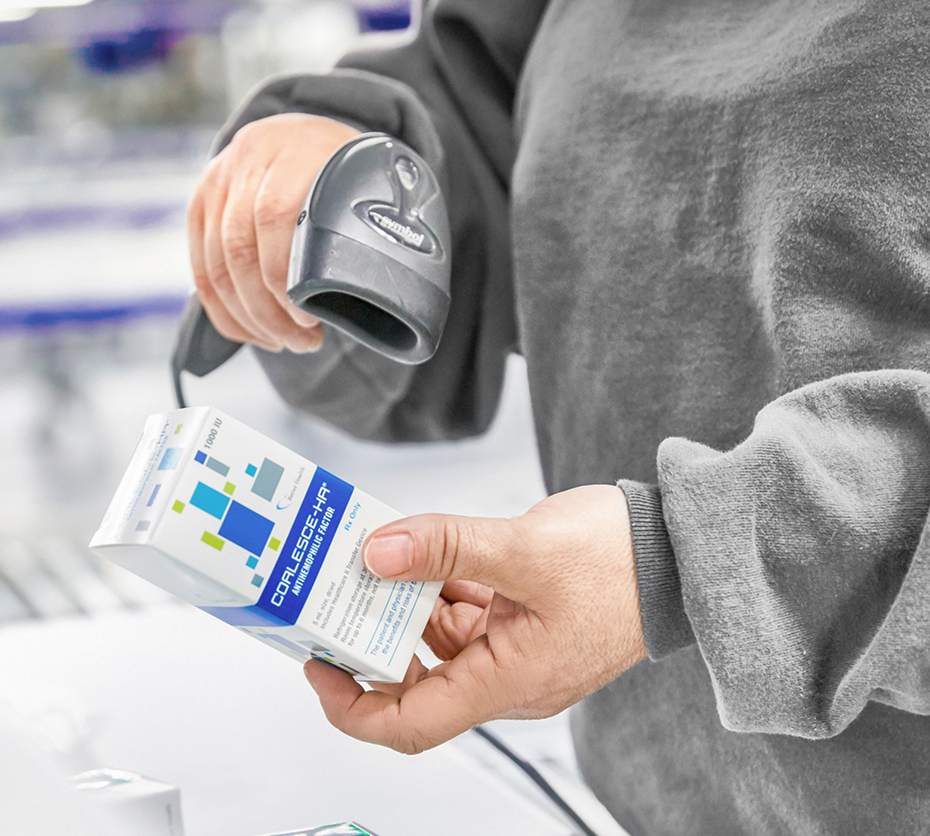
In drug serialization, a unique serial number is assigned to each prescription product unit and packaging level. Each prescription product package identifier/serial number provides details on its origin, lot, and expiration date. This unique identifier can be used to track each unit, even when it is packaged in larger bundles and cases, minimizing the risk of counterfeit drugs entering the supply chain.
The serialization process presents a number of challenges for manufacturers seeking to balance efficiency with compliance. We consulted findings from trusted third-party industry surveys to identify the most common key challenges:
- Cost: Manufacturers must invest in systems and infrastructure to support any current and upcoming pharmaceutical serialization requirements efficiently.
- Labeling requirements: Companies must redesign labels for all packaging levels to include 2D barcodes.
- Production efficiency implications: Pharmaceutical serialization impacts many packaging processes — labeling and scanning units; aggregating to cases and pallets —that may slow the production line, reducing output.
- Data management issues: Companies require data systems to manage serial numbers and aggregate data and pass that data efficiently to trading partners along the supply chain.
- Team training: Team members across the supply chain must upskill to adjust to increasing serialization complexity.
Serialization involves assigning a unique identifier to enable tracking of each pharmaceutical product unit. Track-and-trace is the action that uses product serialization to track when change of ownership occurs, allowing trading partners to exchange transaction information at the package level.


Start the conversation
Get in touch to learn about how our 3PL solutions can help you comply with pharmaceutical serialization requirements. Whether you have questions or just need more information, our experts are here to assist you.
* Indicates required field