
Verhaal | Toeleveringsketen
Disruptie opnieuw gedefinieerd: Innovatie omarmen om storingen in de toeleveringsketen te voorkomen

De toenemende behoefte aan veerkracht van de supply chain
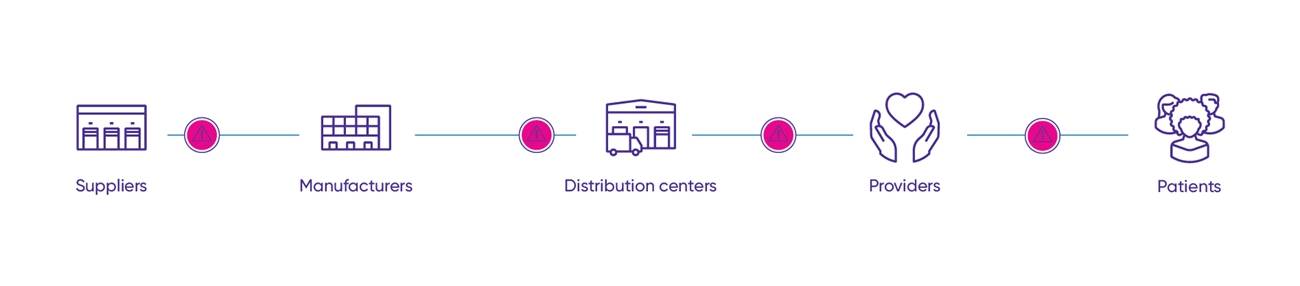
Het zorglandschap evolueert snel om gelijke tred te houden met de veranderende behoeften van patiënten, en de farmaceutische toeleveringsketen wordt daardoor elke dag complexer. Ondertussen dreigen nieuwe en oude uitdagingen voortdurend de operaties te laten ontsporen en de toch al moeilijke taak om essentiële medicijnen in handen te krijgen van patiënten die ze nodig hebben, verder te bemoeilijken.
Om consistente toegang tot geneesmiddelen te behouden, breiden we onze mogelijkheden in de hele farmaceutische toeleveringsketen voortdurend uit om processen veerkrachtiger te maken, zodat we dreigende verstoringen kunnen omzeilen voordat ze gevolgen hebben voor patiënten. We implementeren ook tools om ons te helpen potentiële problemen te voorspellen en sneller aan te pakken, zodat we de industrie kunnen helpen zelfs de meest tumultueuze stormen te doorstaan.

Medicatietekorten
- Waakzame risicobewaking
- Voortdurende investering in ons distributienetwerk
- Bouwen aan sterke en gediversifieerde relaties met leveranciers
- Implementeren van strategieën om de voorraad te optimaliseren wanneer er afwijkingen optreden
Ons sure supply-programma is een goed voorbeeld van onze innovatieve benadering van stabiliteit. Het stelt gezondheidssystemen in staat zich te committeren aan een "vangnet"-reserve van zes maanden van kritieke medicijnen die het risico lopen op tekorten. Sinds de lancering in 2021 is het aantal producten dat via het programma beschikbaar is, in februari 2025 met ongeveer 350 procent gestegen en omvat het nu verschillende ziektetoestanden.
Daarnaast zijn we in gesprek met generieke fabrikanten om langetermijnverbintenissen aan te gaan die meer leveringszekerheid en stabiliteit bieden voor gerichte moleculen. We blijven ook samenwerken met federale en deelstaatoverheidsinstanties, gelijkgestemde organisaties en non-profitorganisaties, zodat we kunnen samenwerken om medicatietekorten te verminderen en verstoringen van de toeleveringsketen te voorkomen.

Wijzigingen in wet- en regelgeving
Om eventuele verstoringen tot een minimum te beperken, doen we er alles aan om voorop te blijven lopen bij ontwikkelingen op het gebied van regelgeving en overheidsbeleid die van invloed zijn op de farmaceutische toeleveringsketen. Ons U.S. Public Policy and Advocacy-team betrekt beleidsmakers actief namens ons bedrijf en onze klanten en pleit voor beleid dat transparantie, veiligheid en efficiëntie binnen de toeleveringsketen bevordert.
We houden ook toezicht op wetgeving die van invloed kan zijn op onze activiteiten en de bredere industrie. Wanneer wetten van kracht worden, zoals de Drug Supply Chain Security Act (DSCSA) of de Inflation Reduction Act (IRA) , bieden we waardevolle hulpmiddelen en proactieve communicatie om onze klanten te ondersteunen tijdens die perioden van verandering. Door een team te hebben dat nauw betrokken is bij overheidszaken en actief leiding geeft aan en samenwerkt bij wetshervormingen, kunnen we bijdragen aan het vormgeven van een wet- en regelgeving die een sterkere, veerkrachtigere farmaceutische toeleveringsketen bevordert.

Interferentie met levering
Bovendien zijn onze ultramoderne distributiecentra strategisch gepositioneerd en uniek geïntegreerd, zodat we voorraad van de ene locatie naar de andere kunnen verplaatsen wanneer dit soort verstoringen zich voordoen. Dit stelt ons in staat om het risico van de bedrijfscontinuïteit te verminderen en de mogelijkheid te behouden om cruciale leveringen uit te voeren.
Door te investeren in technologie die realtime tracking en communicatie biedt, kunnen we snel op deze situaties reageren en klanten eerder bewust maken van mogelijke vertragingen, zodat patiënten de medicijnen krijgen die ze nodig hebben met minimale impact.

Tijd van crisis
We hebben grote stappen gezet om ons aan te passen en te reageren op de uitdagingen die dit soort gebeurtenissen met zich meebrengen, zoals het uitbreiden van onze logistieke capaciteiten om de tijdige levering van vaccins en essentiële medicijnen mogelijk te maken. Alleen al in 2024 hebben we meer dan 23 miljoen griep- en COVID-19-vaccins verzonden naar zorglocaties in de VS.
Door gebruik te maken van geavanceerde technologieën en data-analyse kunnen we de voorraadniveaus efficiënt volgen en onze distributieprocessen optimaliseren tijdens een grote gezondheidsgebeurtenis. Bovendien onderhouden we open communicatielijnen met zorgverleners en overheidsinstanties om snel in te spelen op opkomende behoeften. Onze inzet voor flexibiliteit en innovatie maakt het verschil als het gaat om het effectief reageren op virale uitbraken en het beschermen van de volksgezondheid.